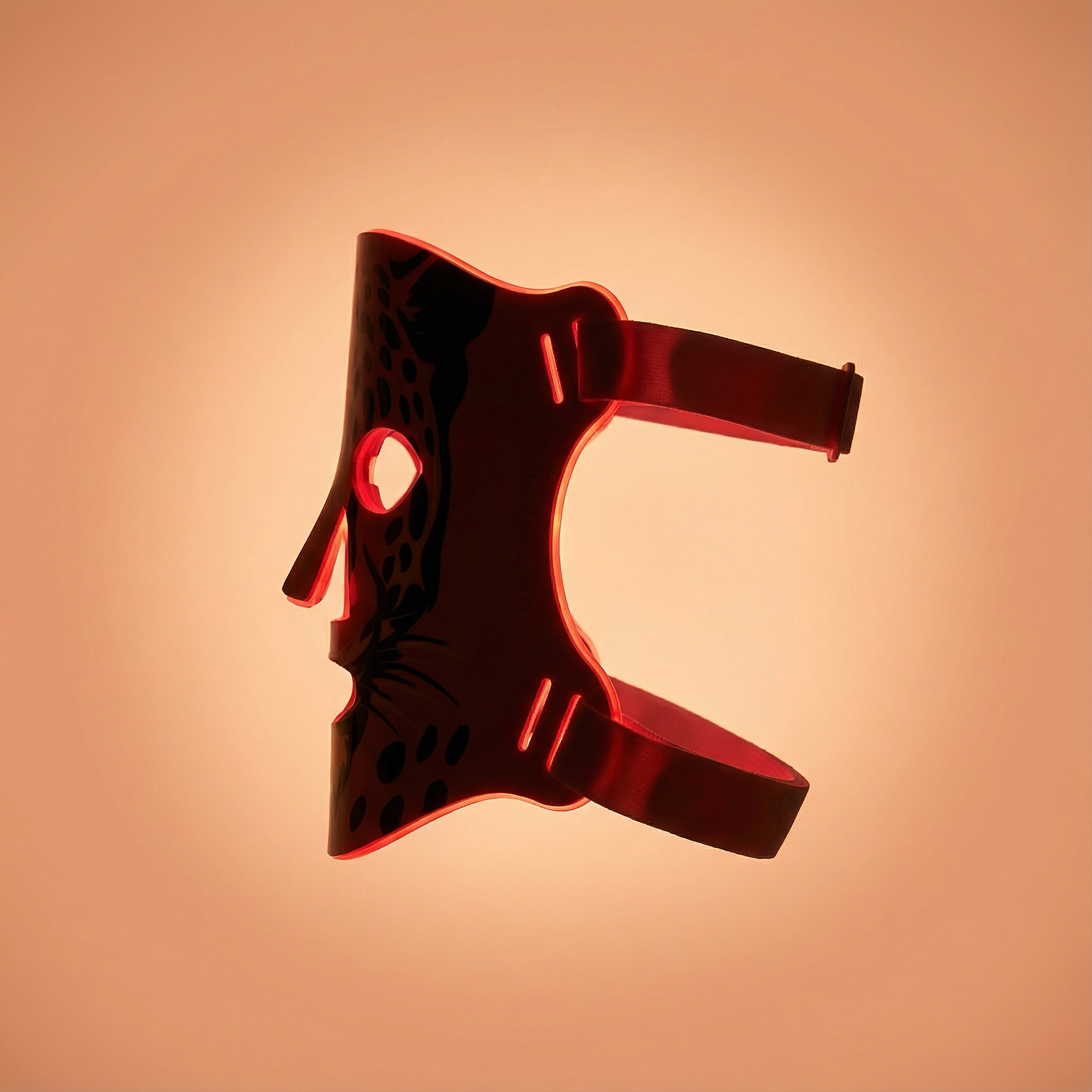
The science of light, made simple.
Originally developed by NASA for wound healing, LED therapy is backed by decades of dermatological research. Here's exactly how it transforms your skin.
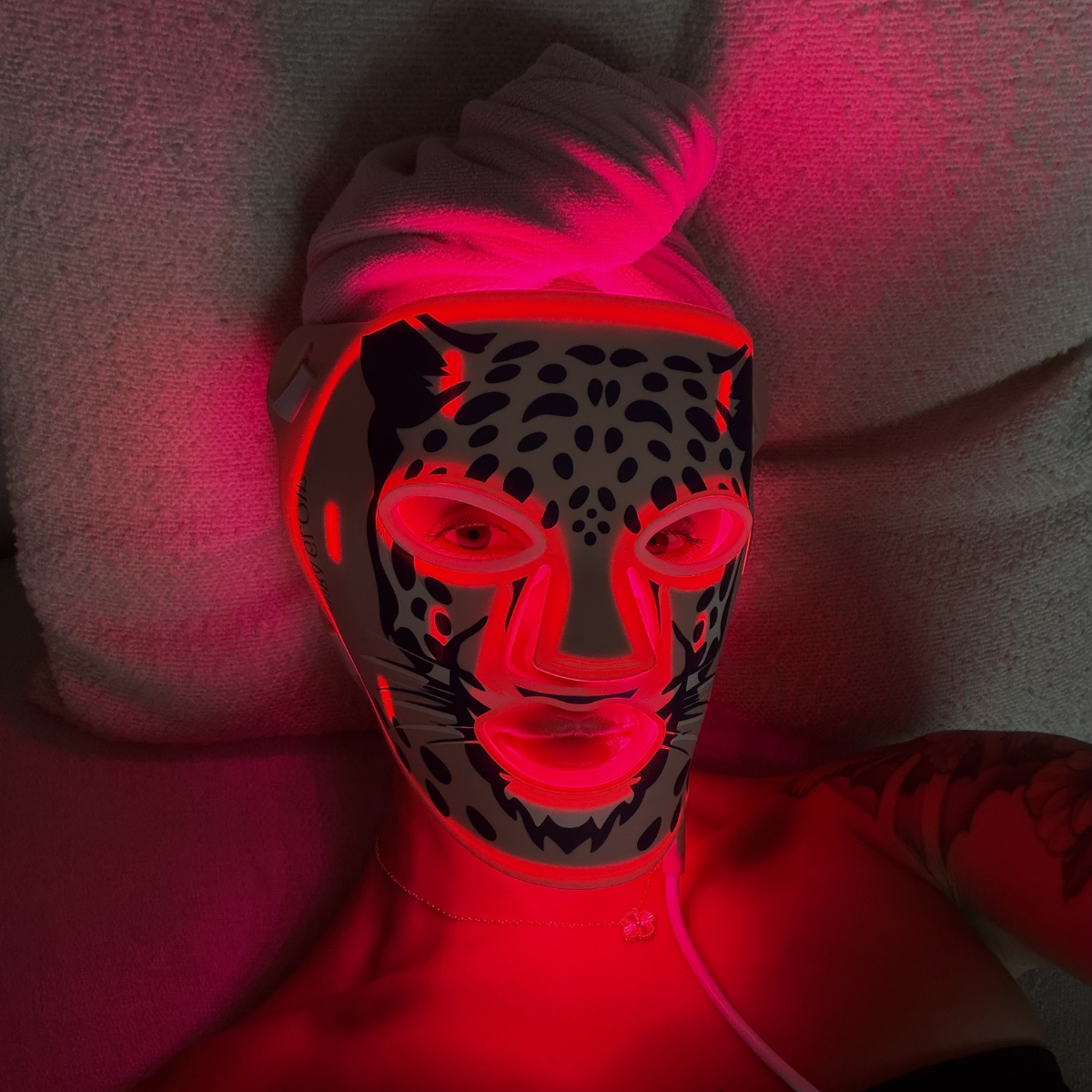
It starts in your cells.
LED therapy works through photobiomodulation, different wavelengths of light penetrate the skin at varying depths, triggering cellular responses that promote healing, collagen production and antibacterial effects.
The light energy is absorbed by your mitochondria, the powerhouse of the cell, stimulating ATP production, which fuels cell repair and regeneration. Crucially, LED light contains no UV rays, so it's gentle and non-damaging.
53 mW/cm²
Clinical irradiance
114
Medical-grade LEDs
4
Targeted wavelengths
6
Treatment modes
Every colour, a purpose.
Red Light 630 nm
Stimulates fibroblasts and collagen production to soften fine lines and restore firmness.
Near-Infrared 850 nm
Penetrates deepest to accelerate cellular repair, circulation and reduce inflammation.
Blue Light 415 nm
Targets P. acnes bacteria in the sebaceous glands to clear and prevent breakouts.
Pink (Red + Blue) Dual
A balanced blend that calms, clarifies and brightens for an all-over radiant glow.
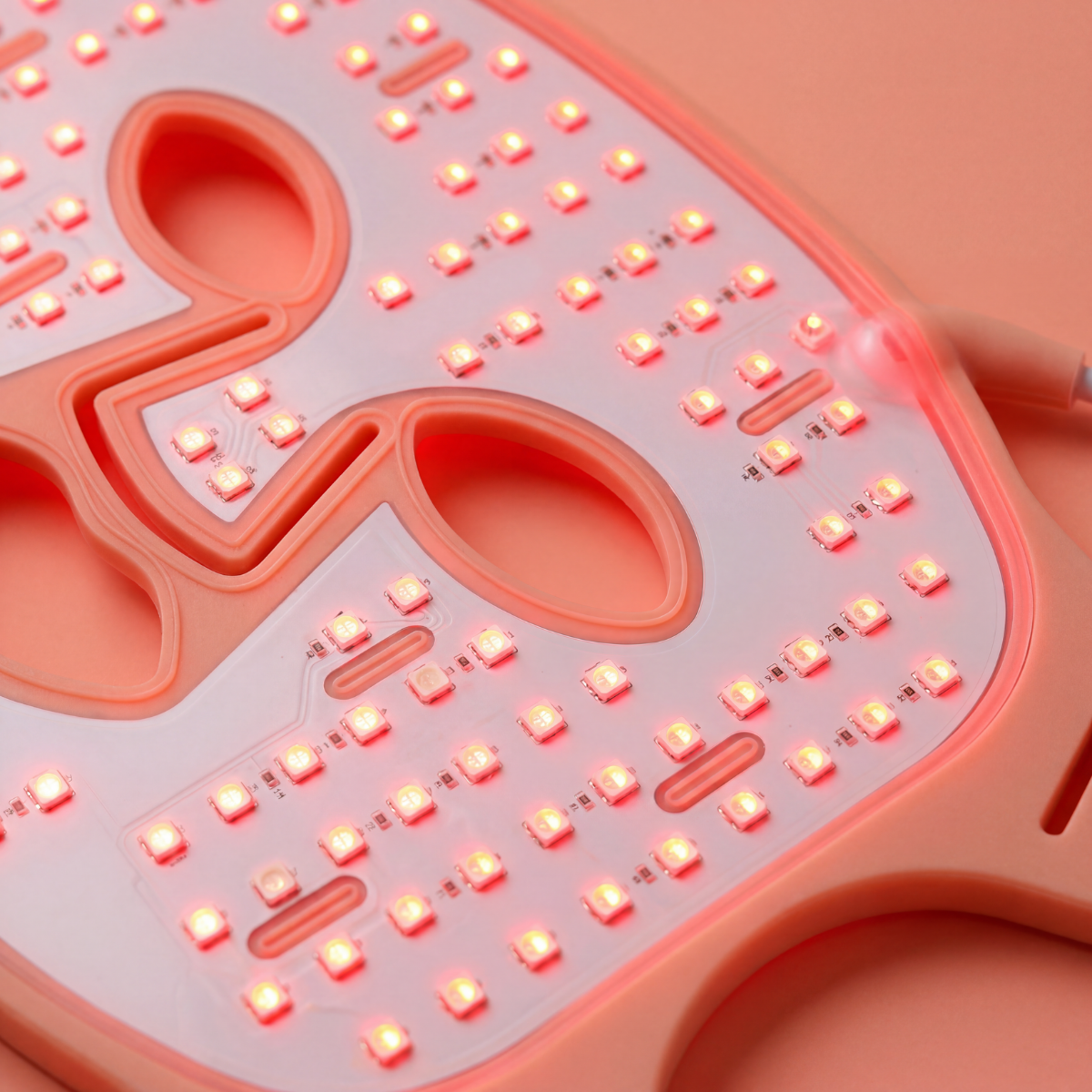
LED light therapy is studied across all ages, and especially loved by women 40+.
Backed by Science
The research behind the glow.
LED light therapy isn't a trend, it's one of the most studied tools in modern dermatology. Here's a look at the published evidence.
Collagen & fine lines
A randomised controlled trial of 136 people found red-light treatment significantly increased intradermal collagen density and reduced wrinkle depth by up to 36%.
Wunsch & Matuschka, Photomedicine and Laser Surgery, 2014Breakouts & clarity
Blue light (~415nm) has been shown to target C. acnes bacteria deep in the pores, reducing inflammatory acne lesions in mild-to-moderate cases.
Gold et al., clinical blue-light study, 2011Repair, tone & pigmentation
A dermatology review confirms LED phototherapy is a safe, non-invasive way to support skin rejuvenation, pigmentation and repair across a broad range of concerns.
Ablon, J Clin Aesthet Dermatol, 2018Studies refer to LED light therapy in general. Individual results vary, and this device is not intended to diagnose or treat any medical condition.
The evidence is clear.
Red Light & Collagen
Journal of Clinical & Aesthetic Dermatology
Red light therapy significantly improves wrinkles, fine lines and skin texture by stimulating fibroblast cells to produce more collagen and elastin.
Blue Light & Acne
Journal of the American Academy of Dermatology
Blue light effectively kills Propionibacterium acnes, the bacteria responsible for breakouts, while reducing inflammation.
Near-Infrared & Repair
NASA Research on LED Therapy
Near-infrared light (800–900nm) accelerates wound healing and reduces inflammation by penetrating deeper to stimulate circulation and cell regeneration.