Introduction
LED light therapy is more than a skincare trend, it's a scientifically proven treatment backed by decades of research. Originally developed by NASA for wound healing, light-emitting diode (LED) therapy is now widely used in dermatology for its ability to treat acne, reduce wrinkles and accelerate skin repair.
How it works: photobiomodulation
LED therapy works through a process called photobiomodulation (PBM), where different wavelengths of light penetrate the skin at varying depths, triggering cellular responses that promote healing, collagen production and antibacterial effects. The light energy is absorbed by the mitochondria, the powerhouse of the cell, stimulating ATP production, which fuels cell repair and regeneration. Crucially, LED light contains no UV rays, so it's safe and non-damaging.
Red light for anti-aging & collagen
Red light (630–700nm) penetrates deeper than other wavelengths, reaching the dermis where it stimulates fibroblast cells to produce more collagen and elastin. A study in the Journal of Clinical and Aesthetic Dermatology found red light therapy significantly improves wrinkles, fine lines and skin texture, resulting in plumper, firmer skin over time.
Blue light for acne
Blue light (415–470nm) penetrates the sebaceous glands, disrupting the metabolism of Propionibacterium acnes, the bacteria responsible for breakouts, while reducing inflammation and preventing future flare-ups.
Near-infrared for deep repair
NASA research showed that near-infrared light (800–900nm) accelerates wound healing and reduces inflammation by penetrating deeper into the skin, stimulating circulation and speeding up cell regeneration.
The takeaway
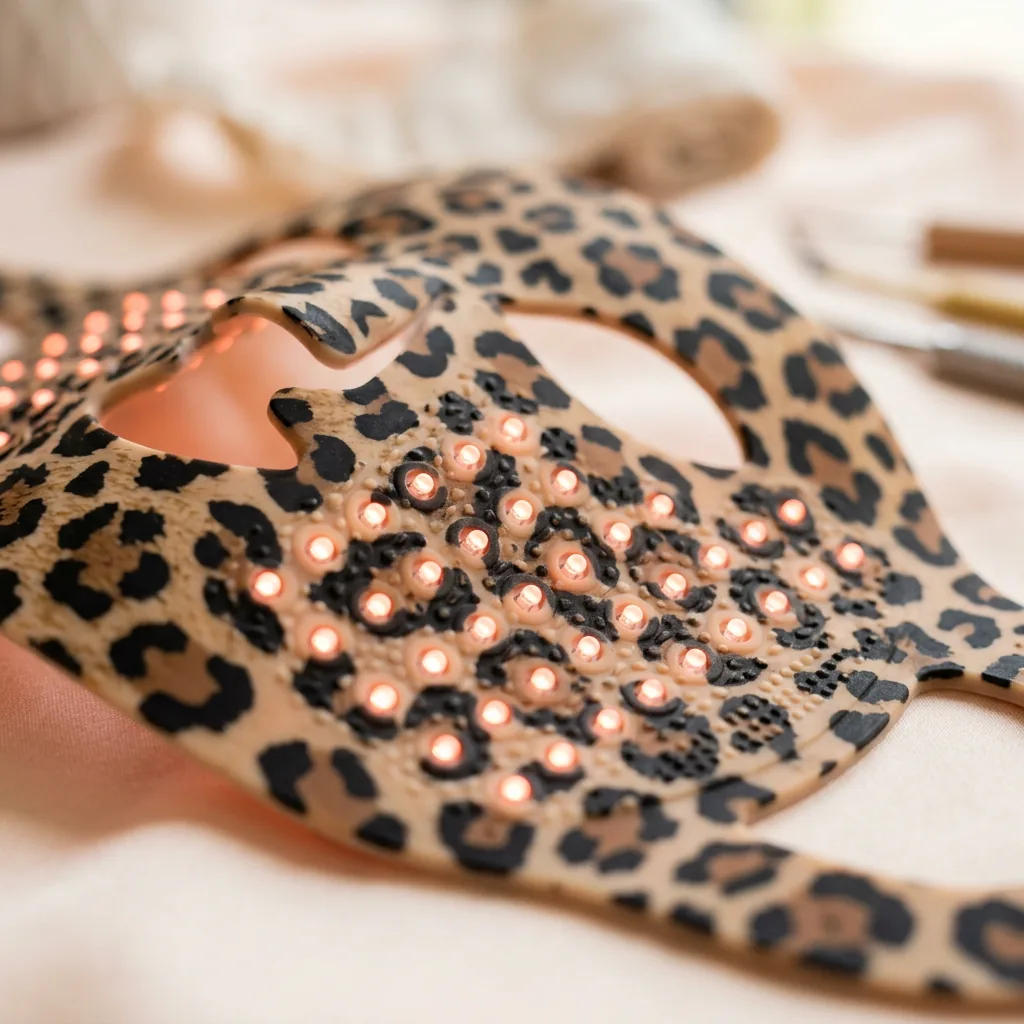
Consistent, at-home LED therapy with clinically-backed wavelengths and adequate irradiance delivers real, measurable results, which is exactly what the Leopard Luxe™ Mask was engineered to do.
Ready to glow?
Experience clinically-backed LED therapy in 10 minutes a day.
